Milford, DE
Milford patios start at the river and run through every neighborhood in town.
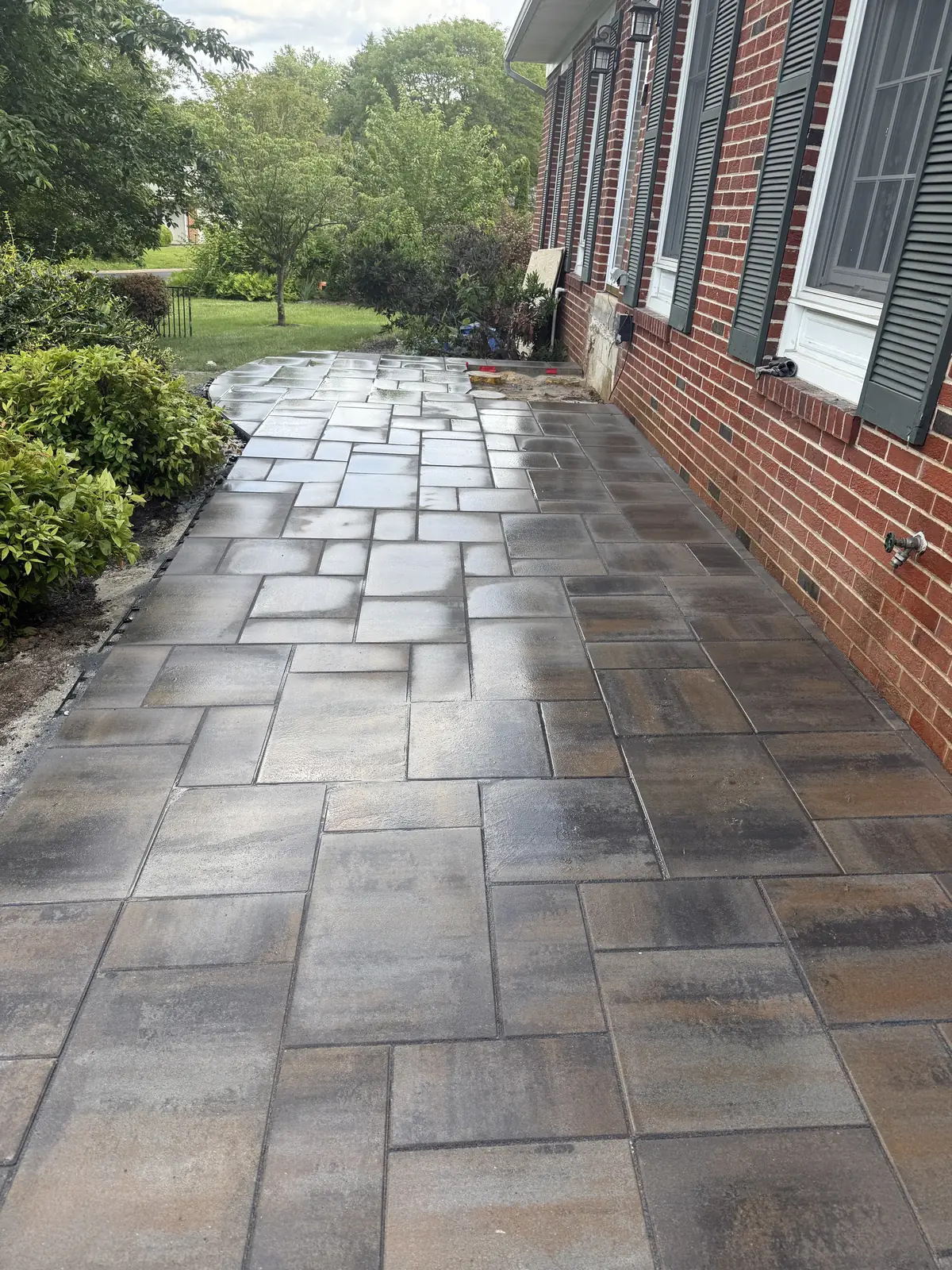
Milford sits on the Mispillion River, and the river shapes outdoor life. Boat launches at the Riverwalk fill on summer weekends. Fishing poles lean against fences from Old Milford to Knollwood. Retirees from Wilmington spend mornings on the patio, and new construction in Ashton puts outdoor living at center stage. A Milford patio handles clay near the river, drains sandy loam where farmland became subdivisions, and looks good for gatherings or a quiet evening after Big Thursday Park.
The Mispillion Riverwalk is the heart of Milford's outdoor identity, and it drives the kind of patio work we see most often in the historic core. Homeowners on the streets leading down to the Riverwalk, Big Thursday Park, and the Milford Museum come to us with properties that have been in their families for generations — old brick colonials and Foursquares with deep backyards that were originally vegetable gardens or livestock pens. Those lots are narrow by modern standards, squeezed between neighbors who've been there just as long, and the soil is a mix of river silt and clay that shifts with every rainy season. A patio on these properties needs proper base excavation and compaction before a single bag of concrete arrives. We dig down 6 to 8 inches, lay a compacted stone base, and pour a reinforced slab that sits stable through the freeze-thaw cycles that crack patios laid directly on the old topsoil. The finish matters too: near the river, salt air drifts up from the Lewes-Rehoboth corridor on a south breeze, and we use air-entrained concrete with a lightly textured broom finish that resists the mild coastal corrosion and gives wet-weather footing for mornings when the fog rolls off the Mispillion.
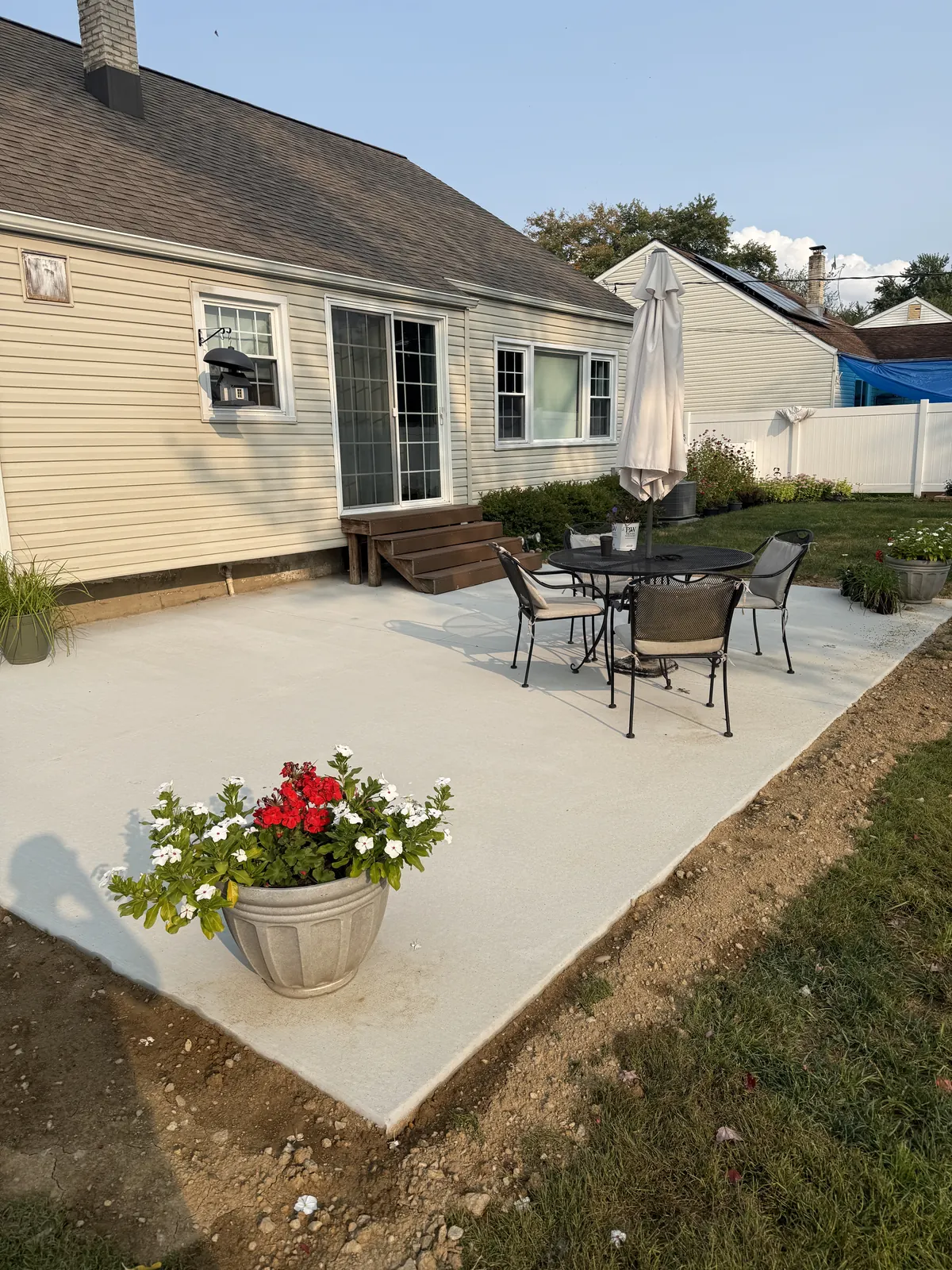
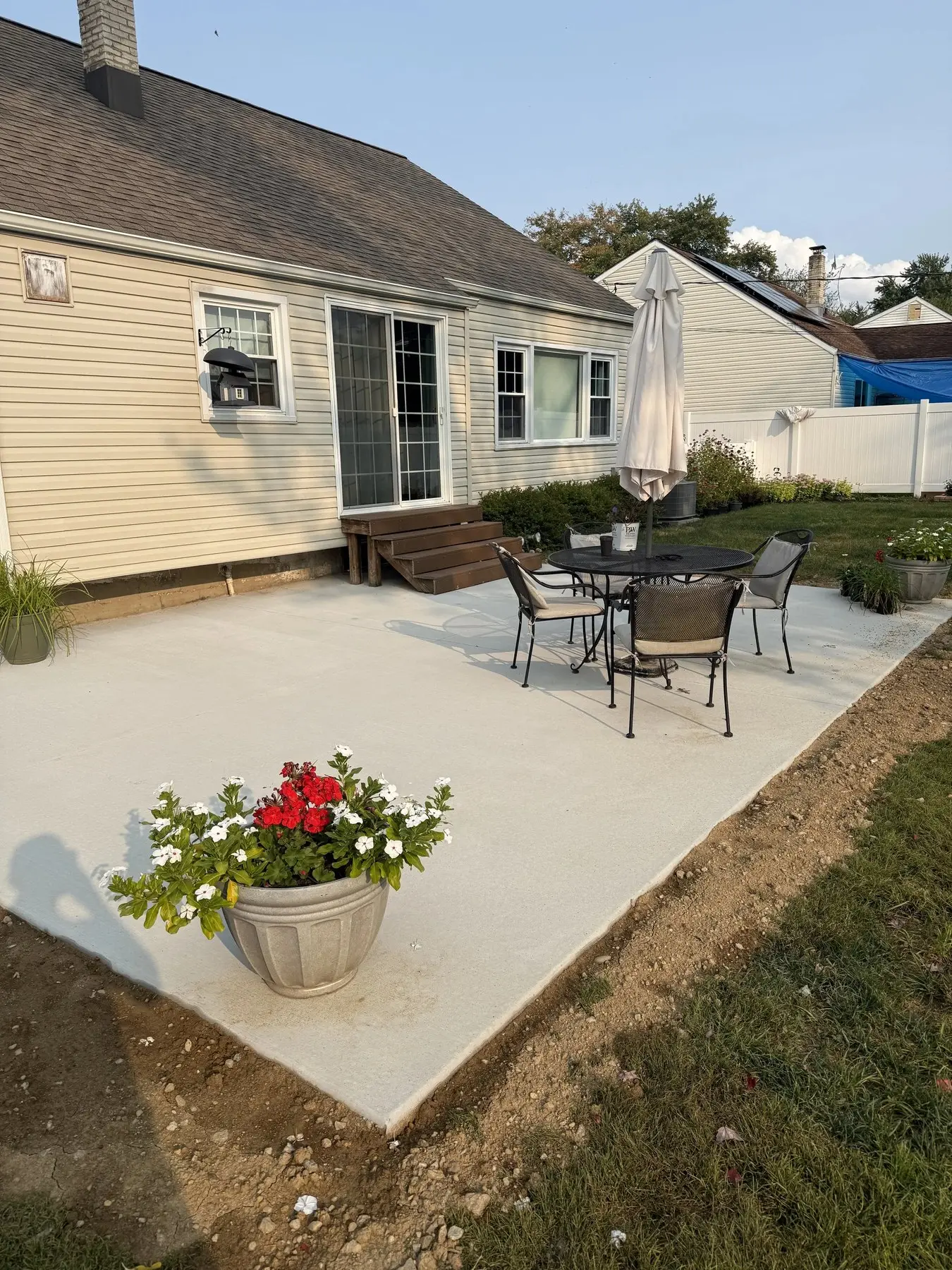
The retiree migration reshaping Milford is the single biggest driver of new patio construction in the 19963 ZIP code. Buyers from Brandywine Hundred, Trinity Vicinity, and northern New Castle County are moving into 55+ communities like Millsboro Pond, the Plantations of Milford, and Knollwood, and they arrive with a clear idea of what they want: a single-story home with a covered patio they can use nine months out of the year. Delaware's mild winters mean a well-designed concrete patio is usable from March through November, and homeowners who just downsized from a two-story colonial in Wilmington to a ranch in the Plantations want outdoor space that replaces the deck and yard they left behind. We build those patios with integrated lighting for evening use, wider dimensions to accommodate outdoor furniture and grill stations, and smooth transitions at the door threshold — no step-down, no trip hazard, just a 4-inch slab that flows straight out of the slider. For the fishing and boating crowd, we also pour river-access patios near the boat launch streets off the Riverwalk: compact slabs with hose-bib connections for washing gear, a slight slope toward a drainage trench so muddy boots don't turn the patio into a pond, and enough square footage to set up a cleaning table and coolers before heading out on the water.
New-construction patio work in the Plantations of Milford, Ashton, and Walnut Shade follows a different playbook than the historic infill jobs in Old Milford. These are planned communities with architectural guidelines, drainage covenants, and HOAs that approve finishes before concrete is ordered. We coordinate directly with builders and homeowners to place patios that sit level with the finished slab of the house, use the community-approved finish — usually a standard broom or light exposed aggregate — and include integrated pad space for a future screened enclosure or pergola. The soil here is different too: these developments sit on what was row-crop farmland a decade ago, with deep topsoil and sandy loam that compacts well but drains fast. We account for that by using a slump between 4 and 5 inches and placing saw-cut joints tighter than the standard 8-foot spacing, controlling the cracking that happens when sandy concrete dries fast in Delaware's summer heat. For homeowners planning a screened porch addition down the road — and many retirees do — we install a thickened edge on the patio side so the future structure has a proper foundation to land on without needing a separate footing pour.
Milford's position as a beach-adjacent town — 45 minutes from Lewes, Rehoboth, and Cape Henlopen State Park — influences patio design in ways that surprise people who think of Milford as strictly inland. Homeowners here entertain like beach people: cookouts that stretch into the evening, outdoor furniture that gets daily use, and a preference for materials that stand up to sand tracked in from the coast and the salt air that carries up the Mispillion watershed. And with Bayhealth Sussex Campus drawing new residents and professionals along the US-113 corridor, the demand for patios that double as after-work entertaining spaces has grown sharply. We build patios with integrally colored concrete in coastal grays and warm beiges that match both the Victorian palettes of Old Milford and the modern coastal-cottage look of the new Ashton and Plantations developments. We seal every patio with a penetrating siloxane sealer that protects against salt and moisture absorption without changing the surface appearance. And for homes near Millsboro Pond or the newer sections of Walnut Shade where lots back up to preserved wetlands, we pour patios on elevated base sections with positive drainage away from the structure — keeping the patio dry and stable even when the seasonal water table rises. Whether you're retiring to Milford from northern Delaware or you've been here long enough to remember when the Milford Museum was just the old post office, a concrete patio is one of the best investments you can make in how you live outdoors in southern Delaware.