Milford, DE
Milford sidewalks bridge the town's historic core and its healthcare-driven future.
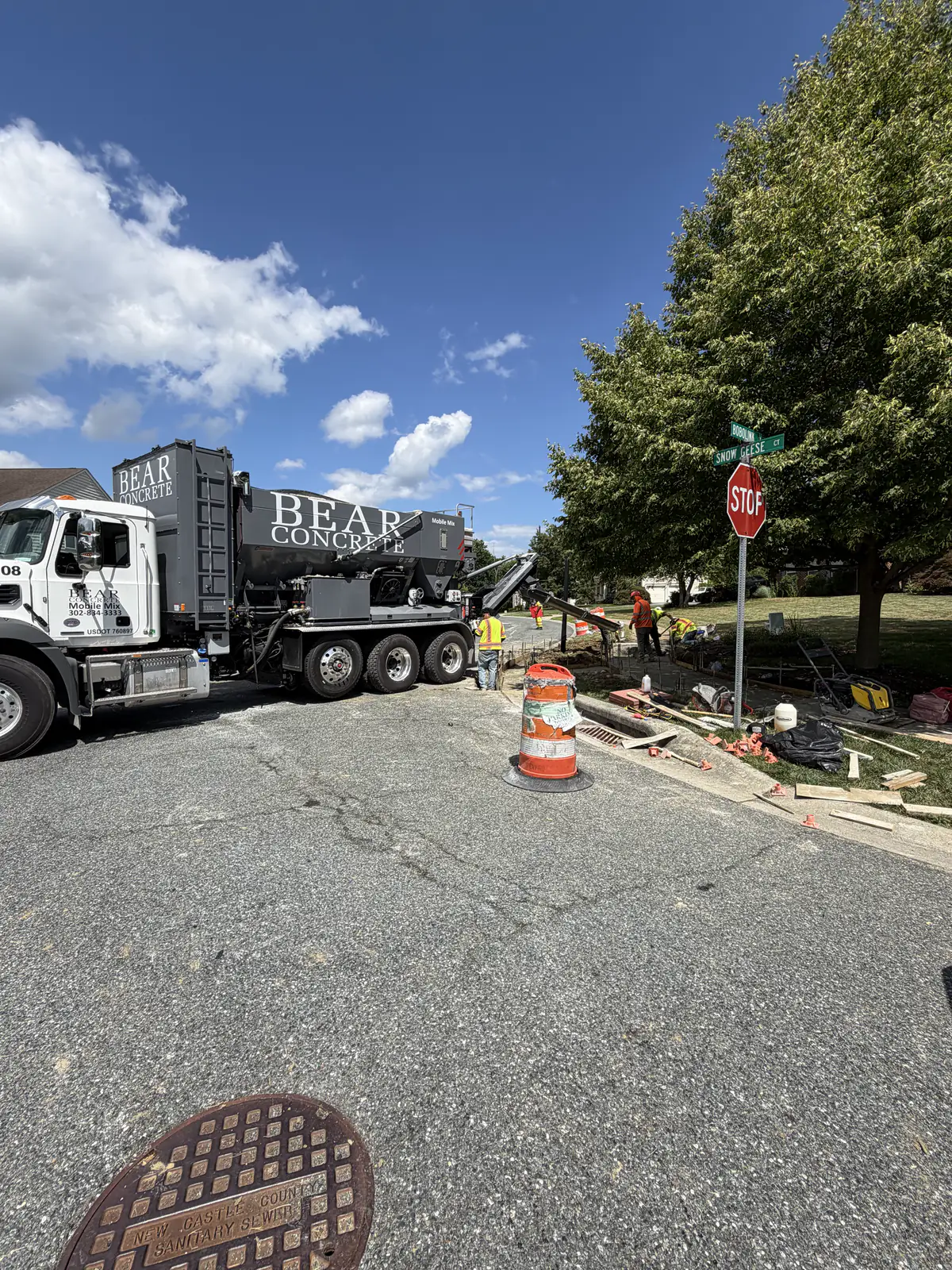
Milford's older housing stock tells a concrete story. Narrow walks threading between historic homes near the Milford Museum and Riverwalk were laid for a different era — narrower, pitched wrong, cracked from decades of freeze-thaw. The new Milford is different: Bayhealth Sussex Campus expansion drives ADA medical access paths, 55+ communities in Ashton need smooth connector walks, and Walnut Shade subdivisions lay walkable grids where farmland stood. Tri-County Construction builds sidewalks for both sides of Milford.
The historic neighborhoods of Old Milford and Knollwood have a sidewalk problem that's decades in the making. Many of the concrete walks connecting homes near the Milford Museum, Big Thursday Park, and the Mispillion Riverwalk were poured in the 1950s and 60s on minimal base preparation — often just gravel laid directly on the native clay. Over time, those walks have settled unevenly, creating trip hazards that are more than an inconvenience; they're a real risk for the growing retiree population walking to the Riverwalk or the Saturday farmers market at Big Thursday Park. We replace these narrow walks with 4-foot-wide paths — or wider where the lot allows — on a proper compacted stone base that accounts for Milford's river-adjacent soils. We pitch the slab away from the foundation at a minimum quarter-inch per foot, saw control joints at 4-foot spacing instead of the standard 6 to account for the shifting clay, and finish with a light broom texture that gives good footing on the foggy mornings that roll off the Mispillion. For homes on the National Register-adjacent streets near the Milford Museum, we work carefully around mature trees, historic foundation vents, and property lines that have been in place for a century or more.
The Bayhealth Sussex Campus expansion on the south end of Milford is reshaping the sidewalk conversation in town. As the campus grows — adding outpatient services, medical office buildings, and specialty clinics along the US-113 corridor — the need for safe, ADA-compliant pedestrian access has become a priority for both the hospital and the surrounding commercial properties. We pour sidewalks that meet the full Americans with Disabilities Act spec: stable, slip-resistant surfaces with no vertical displacement at joints, proper cross-slopes that don't exceed 2 percent, and landing areas at any directional change that give wheelchair and walker users room to maneuver. These aren't decorative walks; they're access routes for patients, visitors, and staff moving between parking lots and medical buildings. We use 4,000 PSI concrete with fiber mesh reinforcement, 5-inch minimum thickness to handle maintenance vehicle crossings, and expansion joints at every driveway and property line interface. The commercial landowners developing parcels near Bayhealth rely on us to keep their sidewalks on schedule so certificate of occupancy timelines aren't delayed by concrete work.
Milford's retirement communities and new subdivisions are driving a different kind of sidewalk demand. In 55+ developments like Millsboro Pond and the Plantations of Milford, residents walk daily — to the clubhouse, the mail kiosk, the community garden, or just around the neighborhood loop for exercise. Those walks need to be smooth enough for walkers and mobility scooters, wide enough for two people to pass, and continuous across the community without stairs or abrupt grade changes that break the path. We pour connector walks in these communities at a minimum of 5 feet wide, with gentle radius curves at corners and color-stained concrete that integrates with the landscape palette rather than glaring white against the green lawns. In the newer subdivisions of Ashton and Walnut Shade — areas that were active farmland just a few years ago — we install sidewalk networks that connect individual lots to the community entry and the arterial roads leading toward Milford's commercial core. These are planned, permitted walks with drainage swales on both sides, utility sleeve crossings for future landscape lighting, and driveway apron transitions that keep the surface smooth from street to garage. Every walk is saw-cut and sealed within 24 hours of placement to control cracking in the sandy loam that dries fast under Delaware's summer sun.
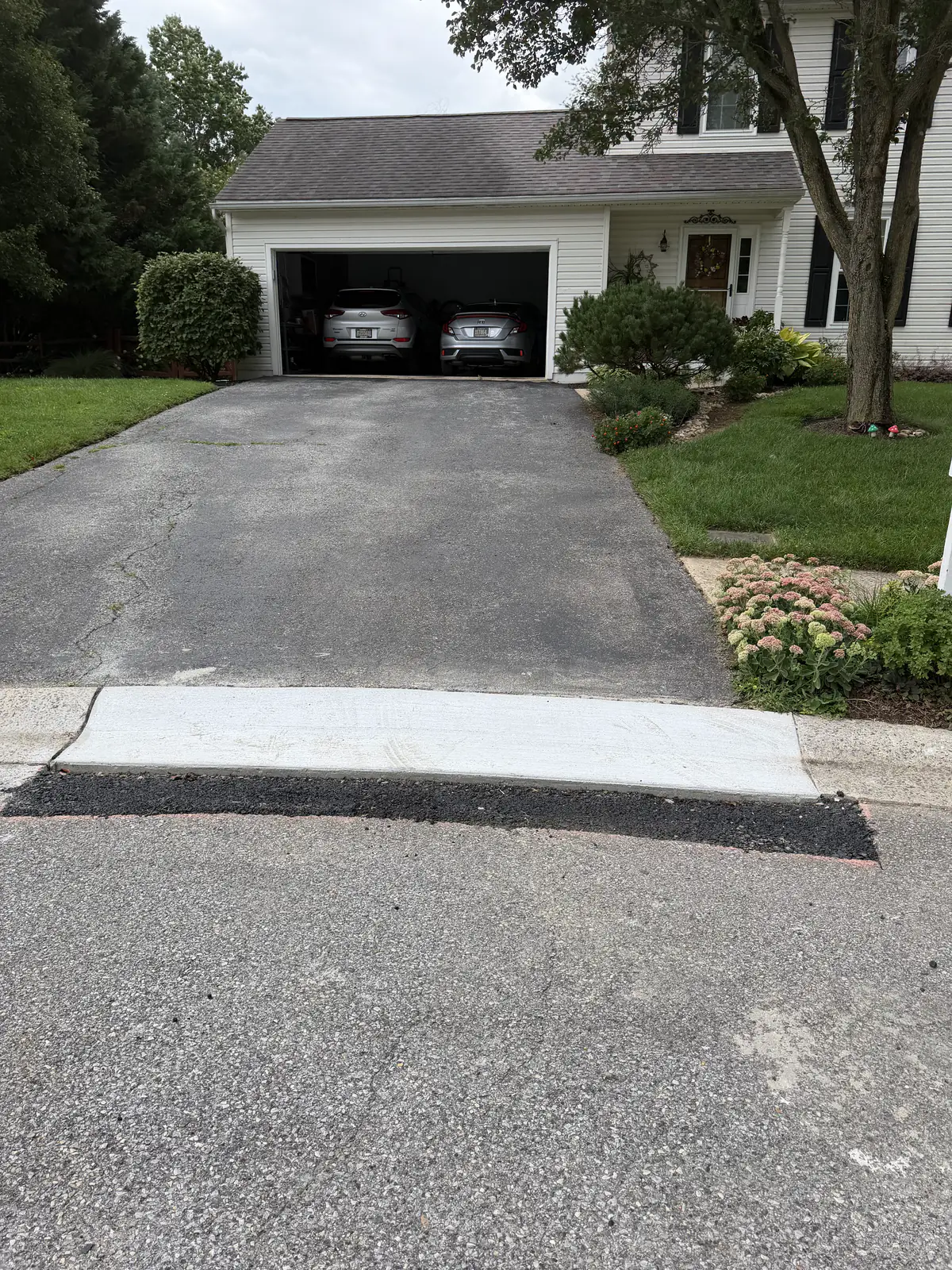
Milford's agricultural roots show up in an unexpected way in sidewalk work: the rural-to-suburban transition neighborhoods on the edges of town. Properties in areas like the approach to Millsboro Pond and the outer sections of Knollwood often sit on former farm lanes that were paved over or graveled decades ago and have never had a proper pedestrian walkway. Homeowners in these areas are increasingly requesting sidewalk connections from their front porch to the mailbox or the road shoulder — a simple safety improvement that keeps them off the asphalt on US-113 feeder roads where traffic moves fast. We build these rural-to-suburban walkways with thickened edges that can handle occasional vehicle overrun, detectable warning surfaces at road crossings, and alignment that follows the natural grade rather than forcing a level path across a sloped lot. For Milford homeowners who remember when these roads were dirt and the town revolved around the poultry industry and the old downtown storefronts, a new concrete walkway is a modern amenity on a property that still feels like the country. And for the retirees arriving from Wilmington who expect walkable neighborhoods, those connector walks are the difference between staying home and walking to the Riverwalk, the museum, or a neighbor's house on a mild Delaware evening.