Georgetown, DE
Georgetown Driveways Built for Every Era of the County Seat
Georgetown's driveways tell the story of the town's growth. Older homes near The Circle sit on thin 1950s-era slabs that never had a proper gravel base. New construction in Coastal Crossing, Sussex West, and Pine Hollow needs code-ready driveways that match modern curb appeal. Poultry industry workers running long driveways off US-9 and DE-404 need concrete that stands up to heavy truck traffic. Tri-County pours every Georgetown driveway with the base it deserves.
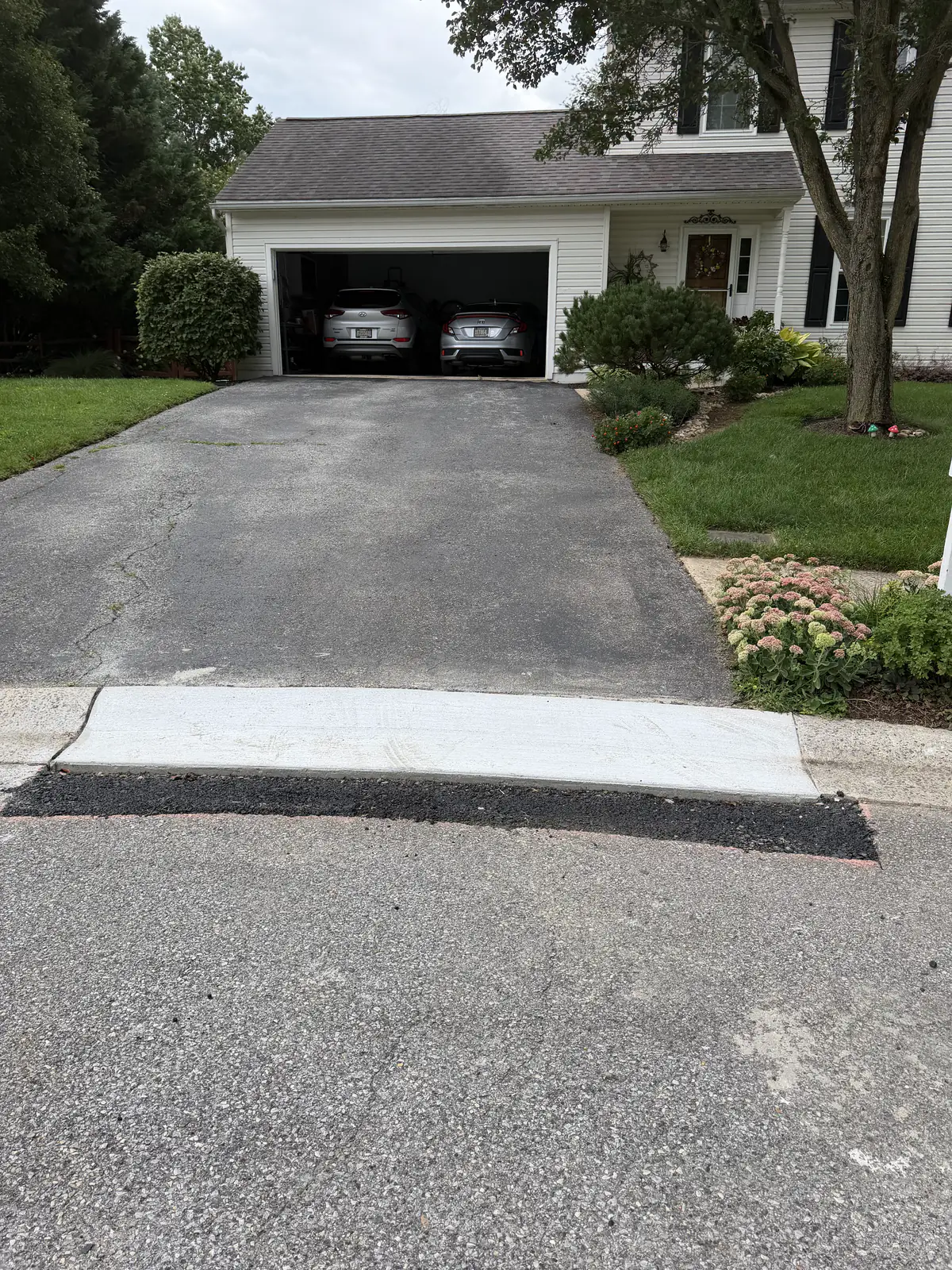
The older residential streets radiating from The Circle hold some of Georgetown's most character-rich homes — and some of its worst driveways. Houses built between the 1950s and 1970s in neighborhoods like Stockley were poured on whatever base was cheapest at the time, often just a few inches of sand over uncompacted soil. Those driveways have spent decades settling, cracking, and spalling through Sussex County's wet winters and humid summers. When we tear one out, we usually find a slab barely 3 inches thick with no wire mesh and a base that has been washing away for years. Our replacement process starts with full removal of the old concrete, excavation to at least 8 inches below grade, compaction of the subgrade with a vibratory roller, and a 6-inch minimum crushed stone base before the 4,000 PSI mix goes in. The finished driveway on a Stockley or Olde Town property near The Circle has control joints cut at 10-foot intervals, a light broom finish for slip resistance, and a thickened edge where it meets the street so the concrete does not crack off when sidewalk snow removal equipment hits it in February.
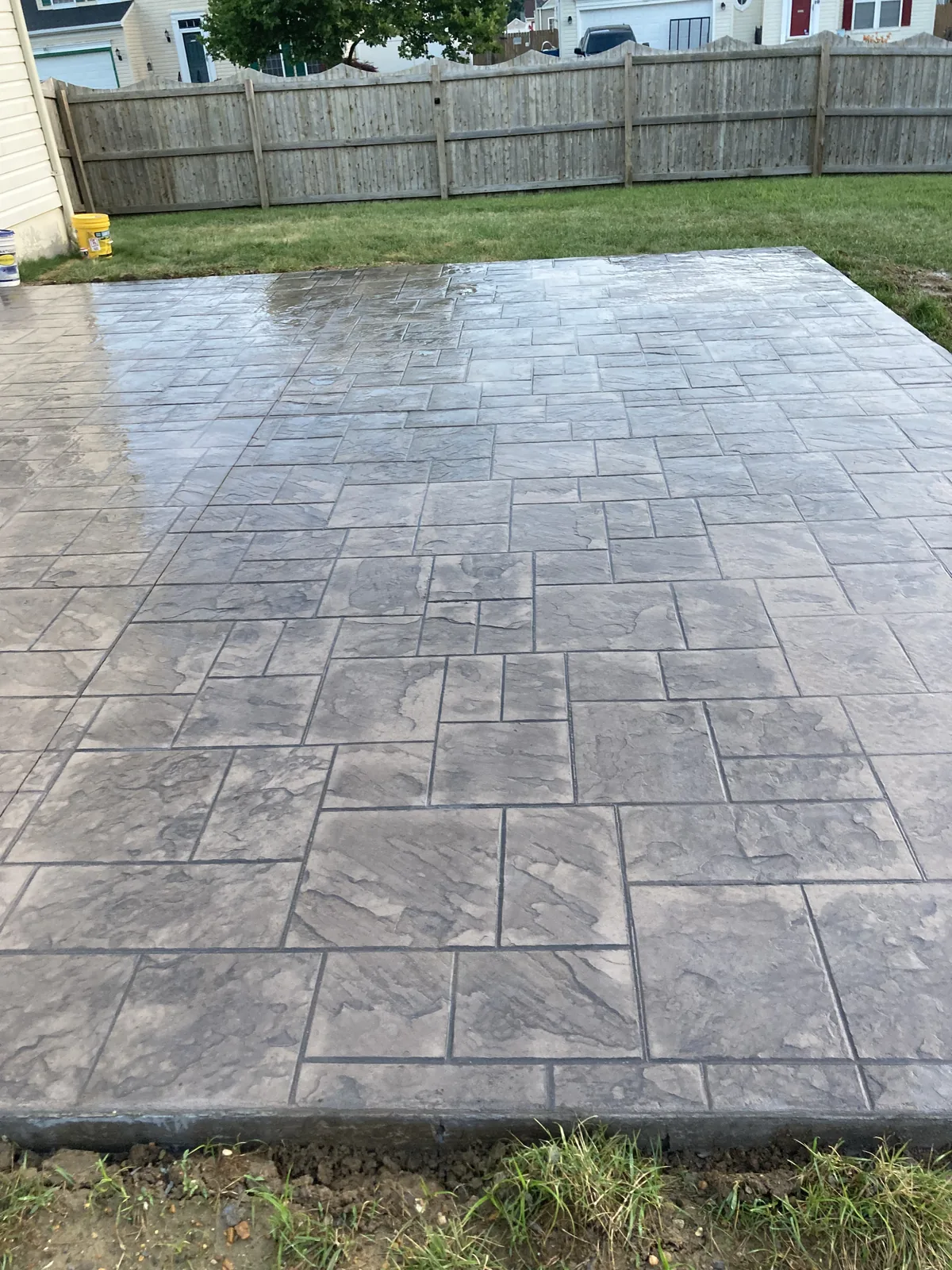
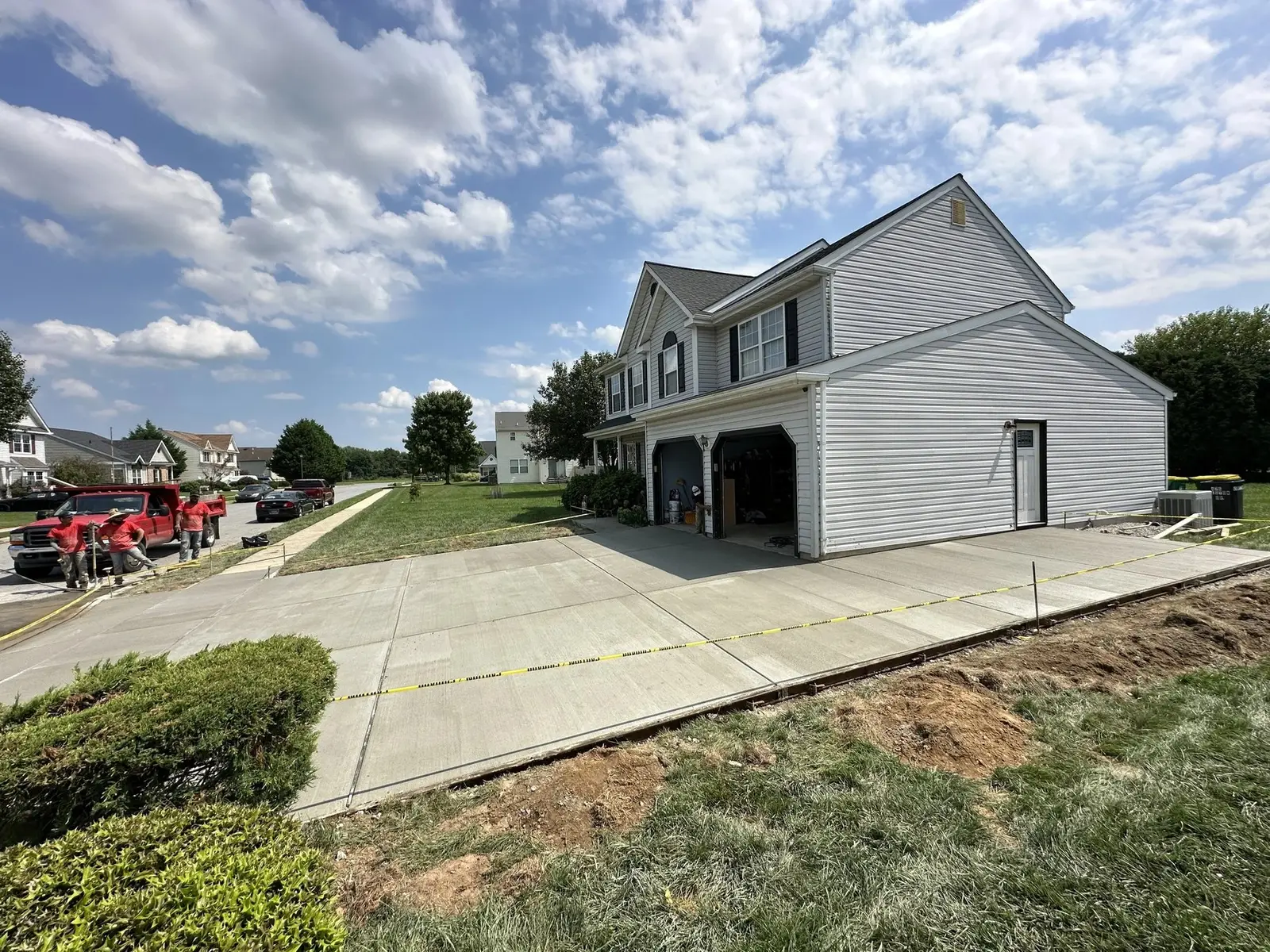
New construction driveways in Georgetown's growing subdivisions are a different challenge entirely. Coastal Crossing, Sussex West, and Pine Hollow are adding dozens of new homes each year, and every one needs a driveway that matches the builder's schedule and the homeowner's expectations. For these projects, we coordinate with the sitework contractor on final grading so the driveway transitions smoothly from the garage slab to the street apron. The base gets 6 inches of compacted DGABC — Delaware-spec graded aggregate base course — topped with 4 inches of 4,000 PSI concrete reinforced with fiber mesh for crack control. We pour in sections with tooled joints at 10-foot spacing and edge the concrete with a concrete edger for a finished look that enhances the curb appeal homebuyers expect in neighborhoods like Coastal Crossing. For corner lots and larger homes in Sussex West, we often pour wider driveways with a ribbon of stamped concrete or a bordered apron that sets the property apart from the standard subdivision pour. The key is the base — new construction in Georgetown's clay-heavy soil requires proper compaction testing before the stone goes down, or the driveway will settle unevenly within two years regardless of how thick the concrete is.
Georgetown's poultry industry creates a driveway demand that most Sussex County contractors never see in town. Poultry workers and farm operators living along US-9, DE-404, and the rural roads toward Trap Pond State Park and Stockley drive on lane-length concrete that has to carry heavy trucks, feed delivery vehicles, and the daily traffic of pickup trucks pulling equipment trailers. A driveway on agricultural land off US-9 might run 500 feet from the county road to the house, crossing drainage ditches and utility easements along the way. We build those driveways with a 6-inch reinforced slab on a 6- to 8-inch compacted stone base, thickened at the edges where the driveway meets the county road apron. The concrete gets fiber mesh reinforcement and saw-cut joints at 15-foot intervals — wider spacing than standard residential because the slab is thicker and the base is engineered for truck loads. For poultry industry families in the growing Latino community around Georgetown, we also provide Spanish-language consultation and estimates so every homeowner understands the scope, the schedule, and the investment.
Courthouse workers, retirees, and professionals in Georgetown's residential core want driveways that look good and last. The market around The Circle includes county government employees who walk to work from nearby homes, retirees who bought in Olde Town for the walkability, and attorneys and business owners who maintain properties near the courthouse square. Their driveway needs are different from the agricultural lanes or new subdivision pours. These are shorter runs — often 40 to 80 feet — that sit in full view of the street and contribute to the property's overall appearance. We offer a range of finishes for these Georgetown driveways: standard broom finish for low maintenance, exposed aggregate for a textured look that matches the historic character of The Circle area, or a bordered stamped pattern that gives a high-end appearance without the cost of full-stamped concrete. Every driveway pour near the courthouse includes consideration for the street apron — Georgetown's Public Works department has specific requirements for driveway thickness and reinforcement at the curb cut, and we handle that permit coordination as part of the project. Whether it is a replacement in Stockley, a first pour in Pine Hollow, or a showpiece driveway in Olde Town, the standard is the same: a base that belongs in the county seat.