Georgetown, DE
Georgetown Patios That Fit Your Home, Your Budget, and Your Season
Georgetown is a town of two identities. The historic core around The Circle keeps Sussex County government running, while new developments like Coastal Crossing and Sussex West draw families into the growing ring outside downtown. Whether you are a courthouse employee wanting a patio, a poultry worker in Stockley upgrading the backyard, or a new homeowner in Pine Hollow planning outdoor living, Tri-County pours concrete patios built for the way Georgetown families actually use their space.
Georgetown's backyard landscape is split between two different worlds. The historic properties lining The Circle and threading through Olde Town were built long before outdoor living was part of the plan. A lot of those homes have narrow side yards, brick or stone foundations, and mature trees that have been shading the yard for a century or more. Putting a patio there is not as simple as leveling a patch of grass. We have to work around established root systems, match the grade to old foundation heights, and coordinate drainage so water moves away from buildings that have been settling since the 1800s. The result should feel like the patio has always been there, not like a modern slab dropped into a historic setting. For homeowners on The Circle, that often means choosing a broom or exposed aggregate finish that blends with the brick and stone of the original house rather than competing with it.
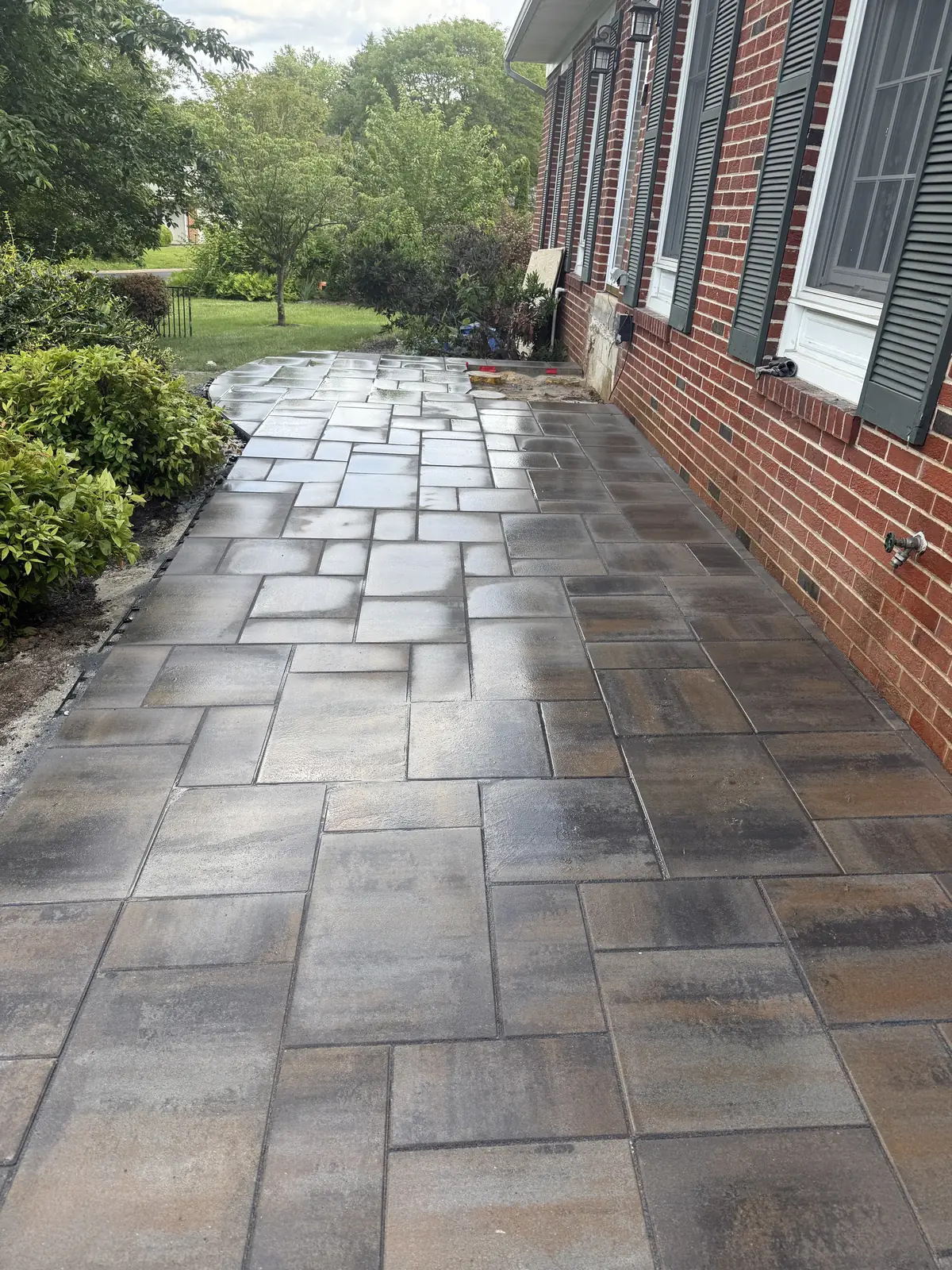
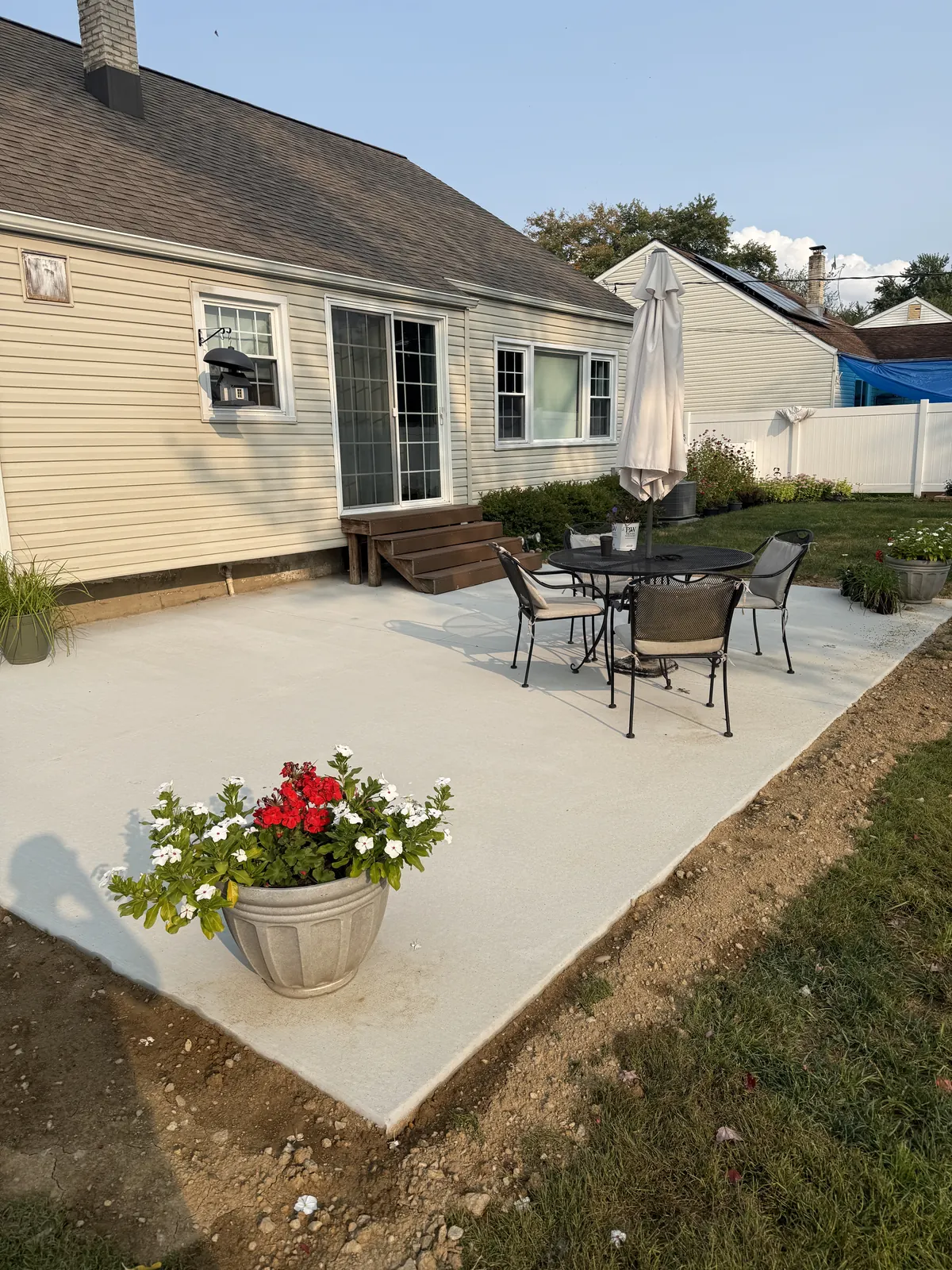
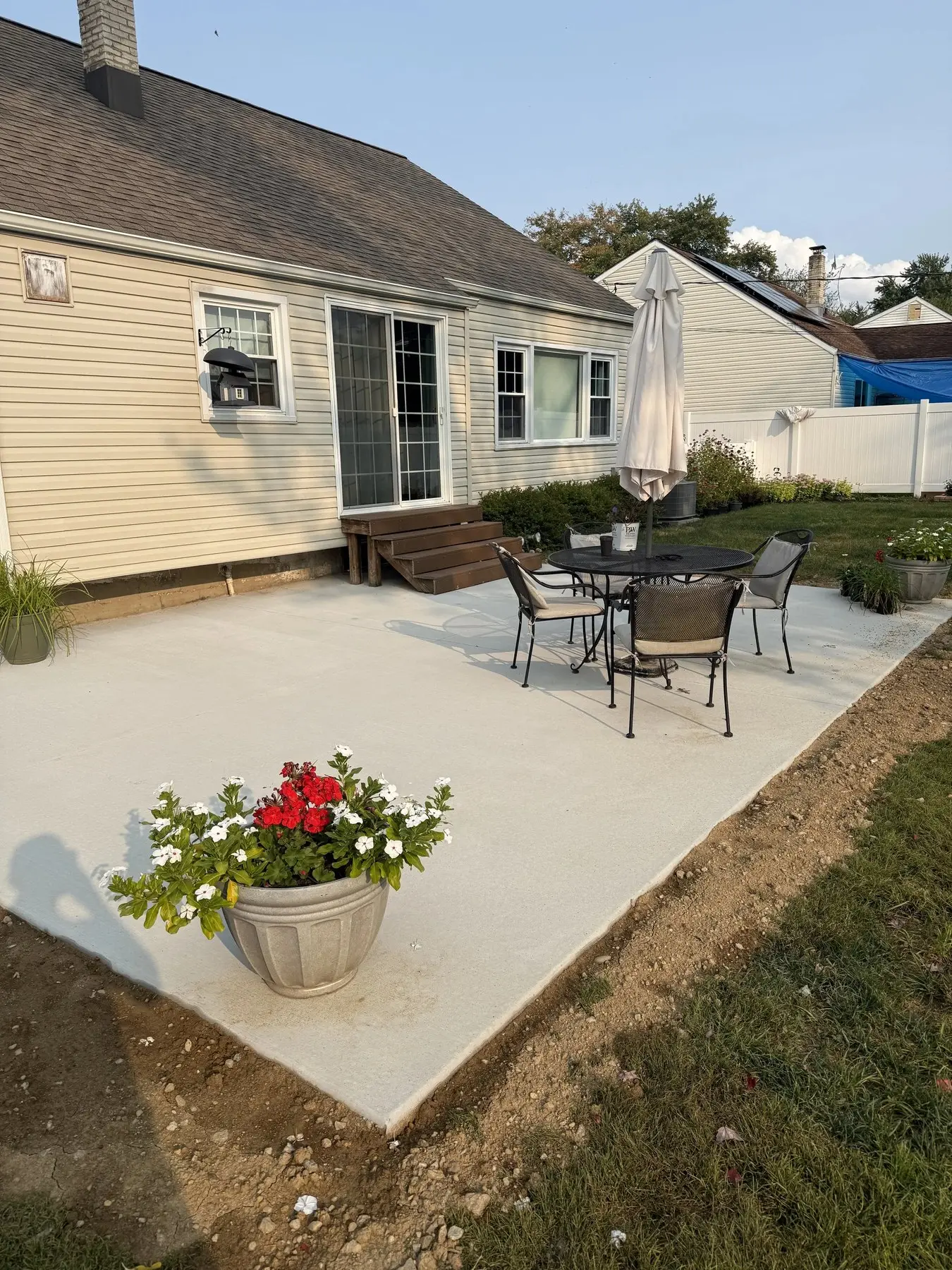
Out in the newer neighborhoods — Coastal Crossing, Sussex West, Pine Hollow — the backyard is a blank slate. These are homes built in the last ten to fifteen years, often on larger lots with room for a real outdoor room. Georgetown's growth corridor along US-9 and DE-404 has brought families from downstate and up-county alike, and a concrete patio is usually the first outdoor improvement after the house is settled. We pour 16x16 patios as a practical minimum — big enough for a dining set, a grill, and some lounge seating — with broom finish for traction around the grill and a subtle pitch so water drains off even during a summer thunderstorm. For homeowners who want something more decorative, stamped finishes with integral color can elevate the space without adding the ongoing maintenance of pavers or natural stone.
A different kind of patio demand comes from Georgetown's working-class backbone — the poultry industry, the agricultural support businesses, and the growing Latino community that keeps much of Sussex County's economy moving. These are practical backyards where a patio serves real needs: a safe, clean surface for kids to play, a place to cook after a long shift, or a durable slab that can handle a work truck being parked on the edge without cracking. We build those patios with 4,000 PSI concrete, rebar reinforcement, and a 4-inch compacted stone base. They are not decorative. They are built for everyday use by people who need their outdoor space to work as hard as they do. The same approach applies to rental properties near Delaware Tech's Owens Campus, where landlords want a patio that holds up to student turnover without needing repairs every spring.
There is also something unique about Georgetown patios that ties back to Return Day. Every two years, The Circle fills with tens of thousands of people for the post-election parade and celebration that has been a Sussex County tradition since the 1790s. Many homes and businesses on The Circle use their outdoor space as a gathering point during that event. A well-built patio or outdoor hardscape becomes a staging area for friends, family, and neighbors who come to town for the parade. Even outside Return Day, Georgetown's role as the county seat means government workers, court staff, and business owners entertain more than the average small town. A concrete patio off a kitchen or side door turns into an extension of the home's entertaining capacity, whether it is a weekday cookout or a Return Day watch party.
We do not pour a Georgetown patio without walking the lot first. The soil around Georgetown can vary block to block — clay-heavy near the courthouse, sandier out toward Trap Pond State Park and Stockley. We check drainage, measure setbacks, note how the yard connects to the house, and plan the pour around real use. If you are in Olde Town with a tight side yard, we form around existing steps and fences. If you are in Coastal Crossing with a backyard that is already graded, we size the patio for the furniture you actually own. And if you are replacing an old cracked slab that settled years ago, we tear it out, fix the base, and pour a patio that will still be level when the next Return Day rolls around.