Georgetown, DE
Commercial Concrete for Georgetown's Government, Retail, Education, and Industry
Georgetown is the commercial and governmental hub of Sussex County. The Circle draws courthouse staff, attorneys, county administrators, and thousands of Return Day visitors. US-9 and DE-404 carry retail traffic from beach-bound travelers and local shoppers alike. Delaware Tech's Owens Campus educates the region's workforce. And the poultry industry — Georgetown's economic engine — depends on concrete facilities that meet USDA standards and production-line demands.
The Sussex County Courthouse anchors Georgetown's commercial core, sitting at the southeast quadrant of The Circle in a building that has served county government since the 1830s. The concrete approach slabs, sidewalks, and plaza surfaces around the courthouse see constant foot traffic from attorneys, court staff, jurors, and citizens conducting county business. These surfaces need to be ADA-compliant, free of trip hazards, and durable enough to handle annual Return Day crowds that pack The Circle wall to wall. We have done courthouse-adjacent concrete work that required after-hours pours to avoid disrupting court operations, concrete mixes matched to existing adjacent slabs for visual continuity on a historic public square, and saw-cut control joints spaced to prevent cracking under the weight of event staging and maintenance vehicles. The standard is higher for government work in a county seat, and we deliver it.
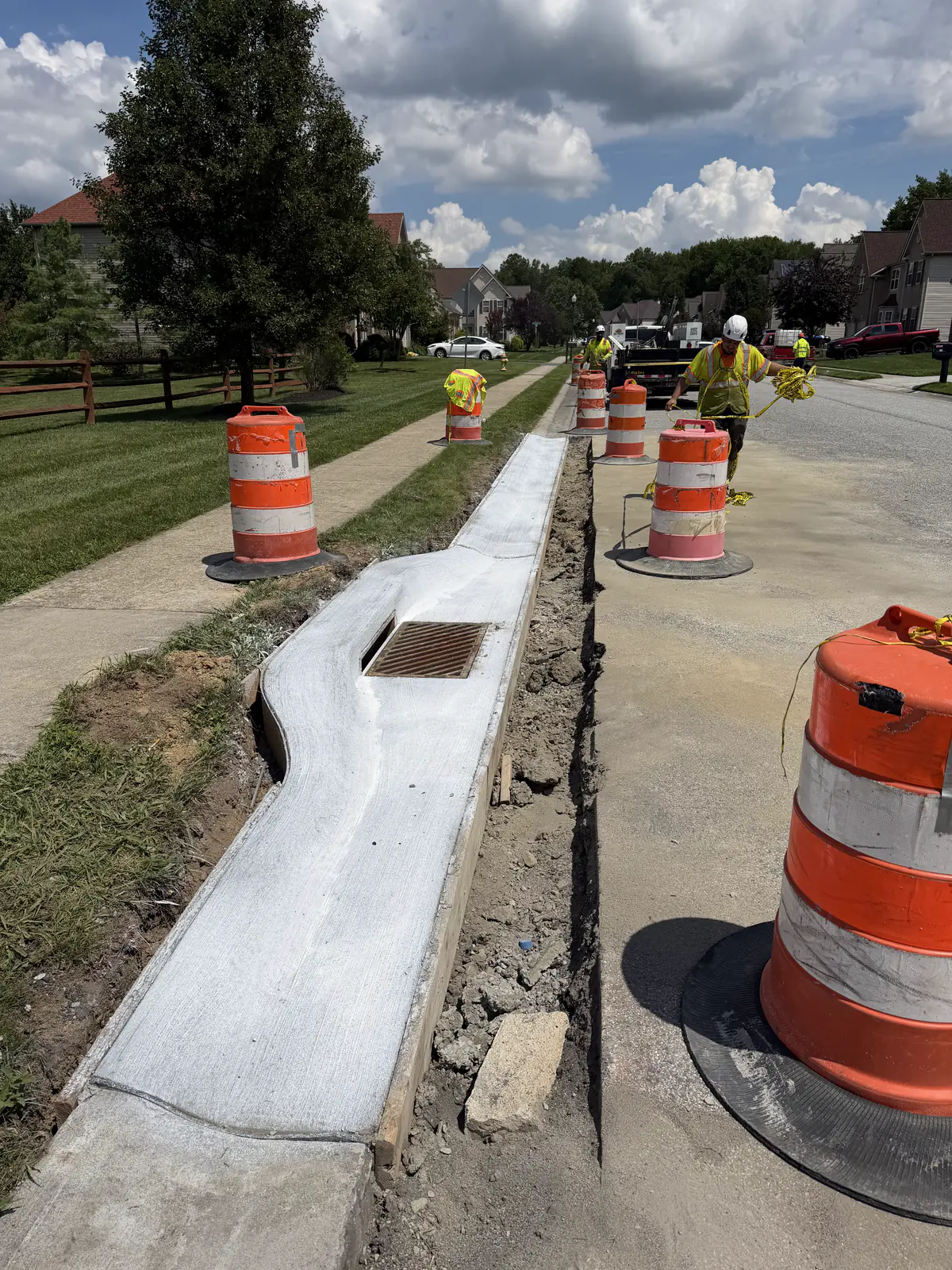
Beyond the courthouse, county government buildings on The Circle and along the surrounding blocks need a range of concrete services. Approach slabs for the Sussex County Administrative Offices, sidewalk replacements where tree roots have lifted panels along The Circle's pedestrian routes, wheelchair ramps that meet 2024 ADA standards, and loading dock aprons at county facilities that handle deliveries of everything from office supplies to emergency management equipment. County government does not shut down for construction, so we plan every government building pour around operating hours. That often means setting forms on a Friday afternoon, pouring Saturday morning, and having the concrete cured enough for foot traffic by Monday. The same approach applies to the county's satellite facilities along DE-404 and US-9 — election offices, emergency services buildings, and public works yards that need durable concrete floors and aprons.
Delaware Technical Community College's Owens Campus sits on Delaware Avenue just south of US-9, serving thousands of students in credit and workforce development programs. The campus walkways, ADA ramps, outdoor classroom pads, and building approach slabs need concrete that holds up to heavy daily foot traffic, bicycle traffic, and periodic maintenance vehicle access. We have poured cross-campus walkways at Del Tech that connect the main academic building to the allied health and workforce development wings, using exposed aggregate finishes that reduce slip risk during Delaware's wet fall and spring semesters. The college runs classes year-round, so we schedule pours during semester breaks and low-enrollment windows to keep pathways open and safe for students.
The commercial corridors along US-9 and DE-404 are Georgetown's retail spine. Shopping centers, gas stations, fast-food restaurants, and agricultural supply stores line both highways, and every one of them needs concrete that can handle delivery trucks, customer vehicles, and the constant freeze-thaw cycle that cracks substandard parking lots within a few years. We pour commercial parking lots in Georgetown with 6-inch reinforced concrete on a compacted aggregate base designed for H-20 loading — the same standard used for highway pavement. That means a feed store parking lot on DE-404 can handle a tandem-axle feed truck driving across it without spalling. It means a fast-food restaurant pad on US-9 stays level through the summer beach traffic surge. And it means the concrete approach at an agricultural supply store keeps its edge when a forklift crosses it a hundred times a day.
The poultry industry is the foundation of Georgetown's commercial economy, and concrete is the material that makes poultry operations work. Equipment pads for feed silos and ventilation systems need flat, level concrete that maintains alignment over years of vibration and seasonal ground movement. Warehouse floors in poultry processing support facilities need 6-inch reinforced slabs with a hard-troweled finish that withstands pallet jack traffic, wash-down chemicals, and daily sanitization cycles. We recently completed a concrete equipment pad for a Georgetown-area poultry operation that required a 10-inch-thick, steel-reinforced slab spec'd for a multi-ton feed bin system. The pour had to happen between production runs, cure fast enough to avoid delaying feed delivery, and hold within a quarter-inch tolerance across the entire 40-by-60-foot surface. That is the level of precision that commercial concrete in Georgetown demands.