Georgetown, DE
Georgetown Retaining Walls Engineered for Grade, Water, and Long-Term Stability
Georgetown sits on the divide between coastal flatlands and the rolling terrain of inland Sussex County. Grade changes are everywhere — enough to turn a backyard into a slope, a driveway into a washout, or a field into an erosion problem. Retaining walls in Georgetown hold the ground where it belongs, create usable flat space, and manage water before it becomes the neighbor's problem.
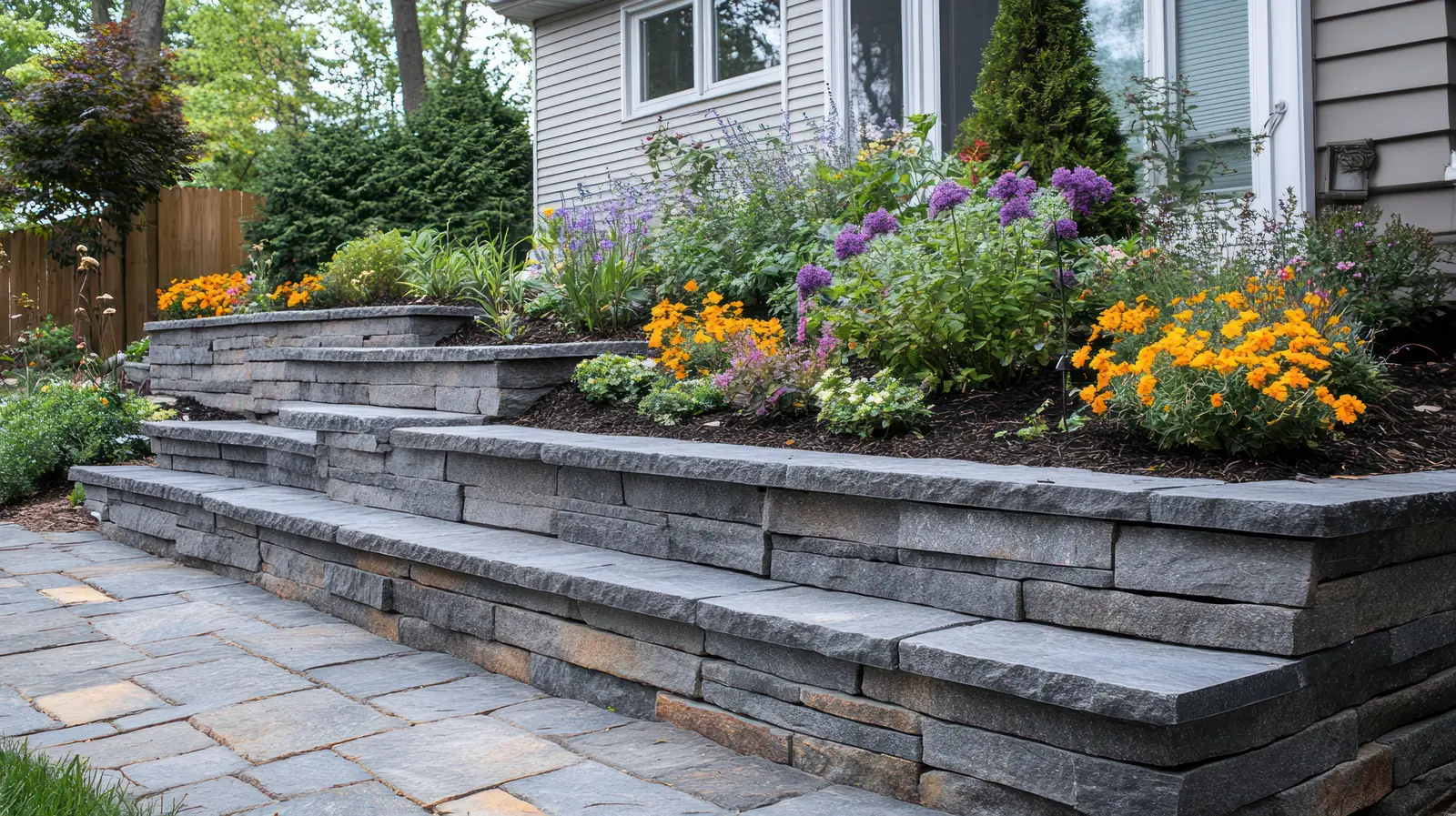
One of the most common retaining wall needs in Georgetown comes from the transition zones where agricultural land meets residential development. Drive from Stockley toward Coastal Crossing and you see it clearly — the flat poultry-grazing fields give way to graded residential lots where builders cut into the slope to lay foundations. That cut creates a raw soil face that erodes with every heavy rain. Homeowners who bought those lots a year or two after construction are now dealing with silt runoff, leaning fences, and mulch washing into the street. A segmental retaining wall at the lot's rear property line stops the erosion, recovers the usable backyard space, and turns an ugly dirt bank into a finished landscape feature. We use geogrid reinforcement and crushed stone backfill so the wall holds up through the long, wet springs that have become the norm in Sussex County.
Pine Hollow presents a different set of challenges. This neighborhood north of town was built on lots carved out of wooded ravines and hilly terrain that most Sussex County builders avoid. Homes here sit on elevated pads with steep drop-offs on one or two sides. Without retaining walls, those slopes slump over time — dirt slides toward the house foundation, water pools against basement walls, and the original landscaping grade disappears within a few seasons. We have built tiered retaining wall systems in Pine Hollow that rise eight to twelve feet in two or three stepped sections, each one reinforced, drained, and capped with a decorative block that blends with the neighborhood's wooded aesthetic. The key is the drainage behind the wall — we install perforated pipe and clean stone so hydrostatic pressure never builds up behind the blocks. A wall that cannot drain will fail in Georgetown's clay-heavy soil within five years.
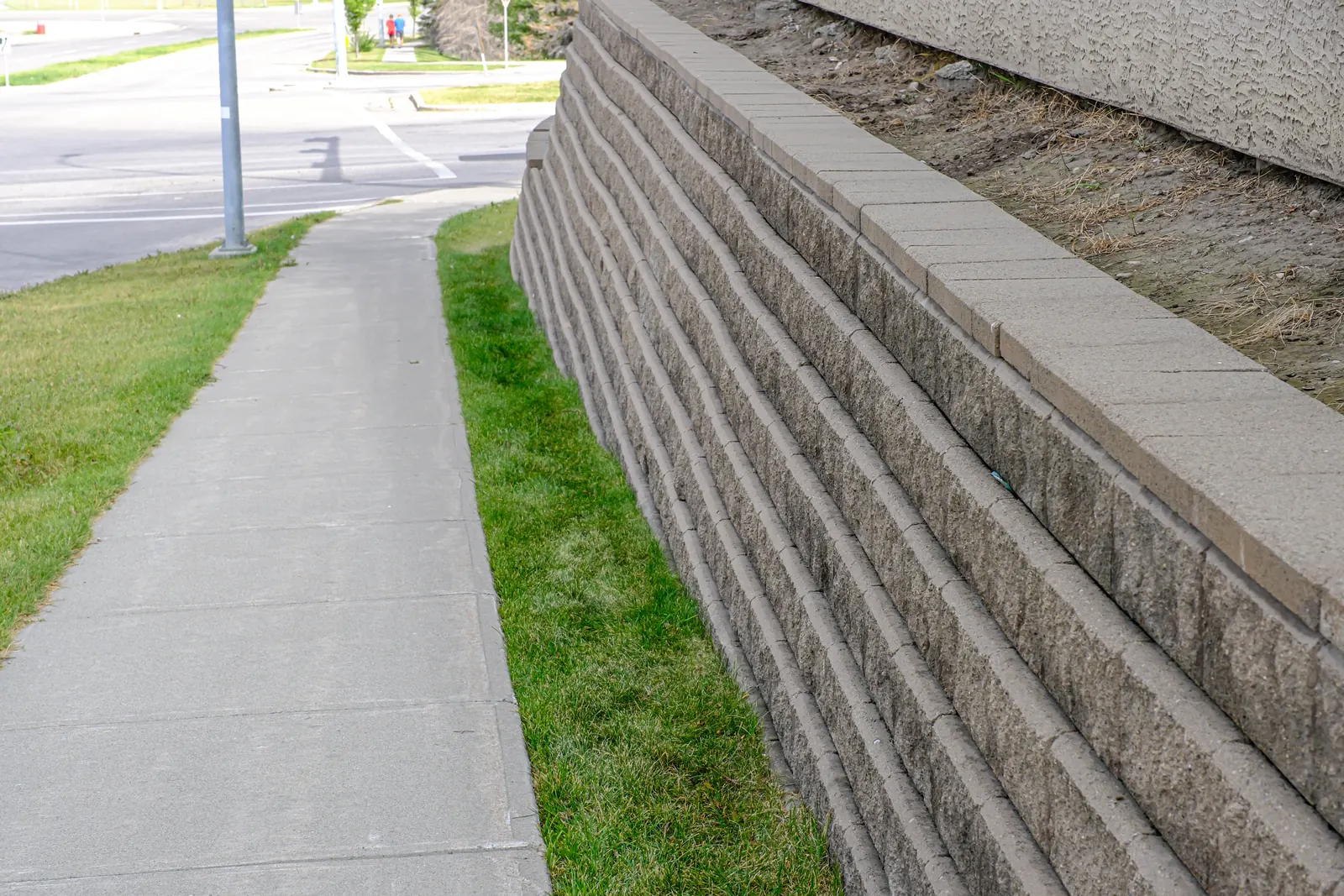
Water management is also the driving factor for retaining walls near Trap Pond State Park and along the US-9 corridor. Trap Pond's watershed feeds into the Herring Creek system, and properties near the park deal with seasonal water tables that rise and fall with the pond level. A retaining wall here is often paired with a swale or French drain to direct water away from structures and toward natural drainage paths. Along US-9, the roadside grade changes are constant — the highway was cut through the landscape decades ago, leaving steep shoulders that property owners are now responsible for maintaining. We have built roadside retaining walls on US-9 frontage properties that stabilize the grade, prevent ditch erosion, and create a level buffer between the road and the business or home behind it. These are built to Delaware Department of Transportation standards with concrete block systems rated for roadside loads.
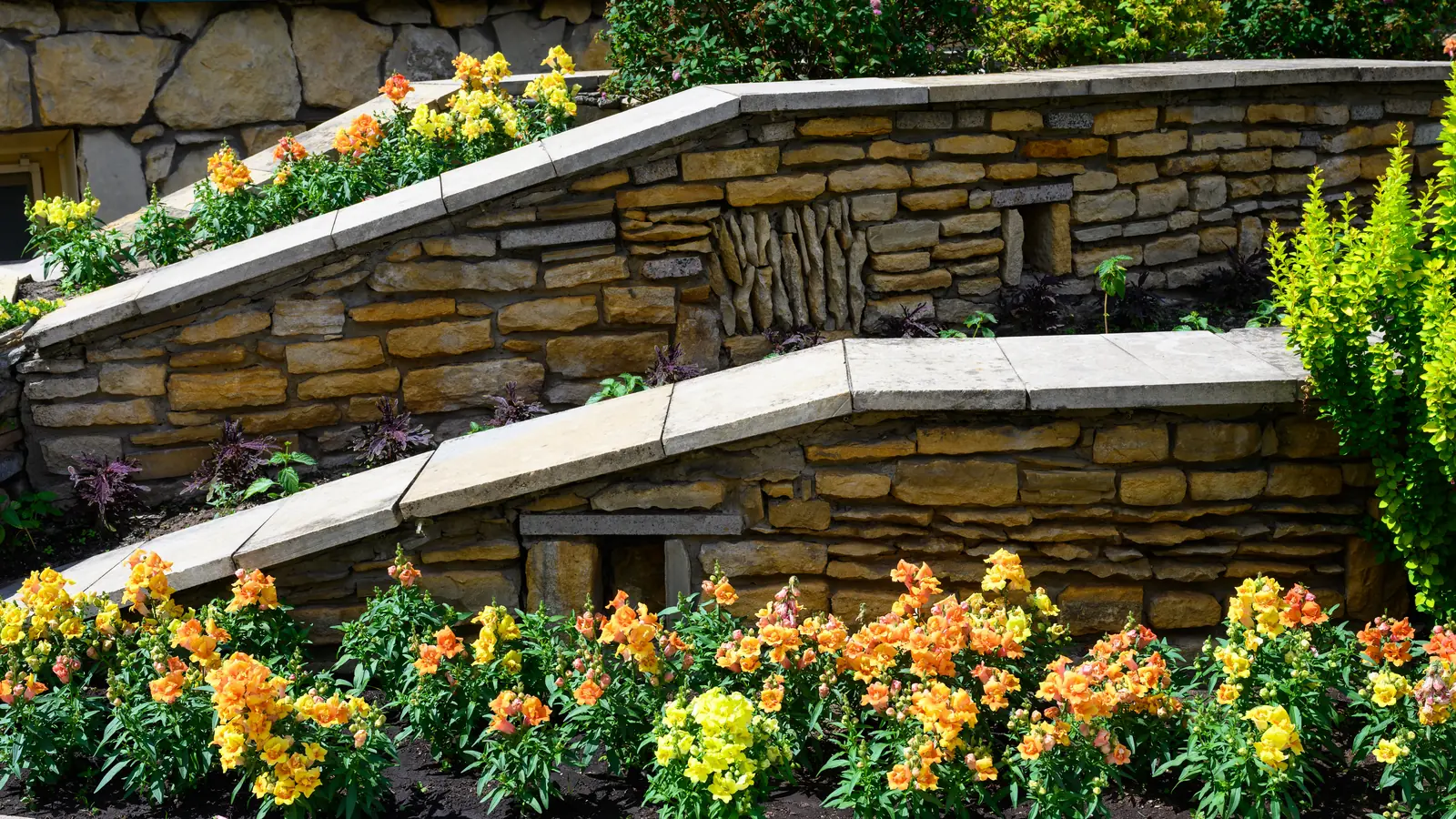
Olde Town, Georgetown's original residential district just off The Circle, has a retaining wall need that surprises most homeowners. The lots here were subdivided in the 1800s, and many of them step down from the street to the house or from the house to the backyard. Early residents simply let the slopes be slopes. Modern owners want terraced gardens, level patios, and walkable pathways that connect the front door to the street without a muddy, rutted slope. We build low-profile retaining walls in Olde Town — rarely more than three feet tall — that terrace the yard into usable levels. We match the wall material to the neighborhood's character: weathered limestone or a textured concrete block that echoes the brick and stone of historic Georgetown homes. These walls also solve drainage problems that have plagued Olde Town basements since before the county courthouse was built.
Beyond residential projects, Georgetown's agricultural and poultry operations need retaining walls for functional purposes. Poultry houses are often built on graded pads that require a retaining wall at the downhill side to maintain the building's level foundation over decades of use. Feed storage areas, equipment yards, and manure staging pads all need perimeter walls that keep material contained and runoff directed. We have built pour-in-place concrete retaining walls at poultry operations in the Georgetown area that are engineered for heavy equipment loads, frequent wash-down cycles, and zero tolerance for shifting. These are not decorative walls. They are infrastructure — built to the same standards as a county road retaining structure and designed to hold for the lifespan of the facility.